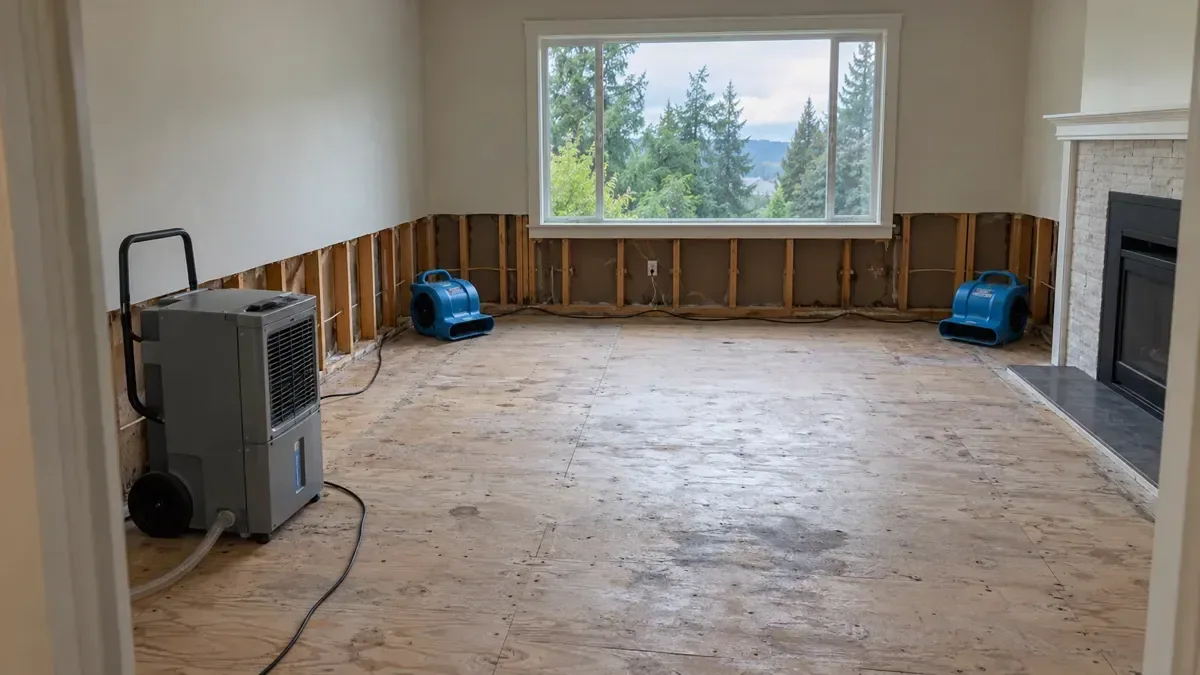
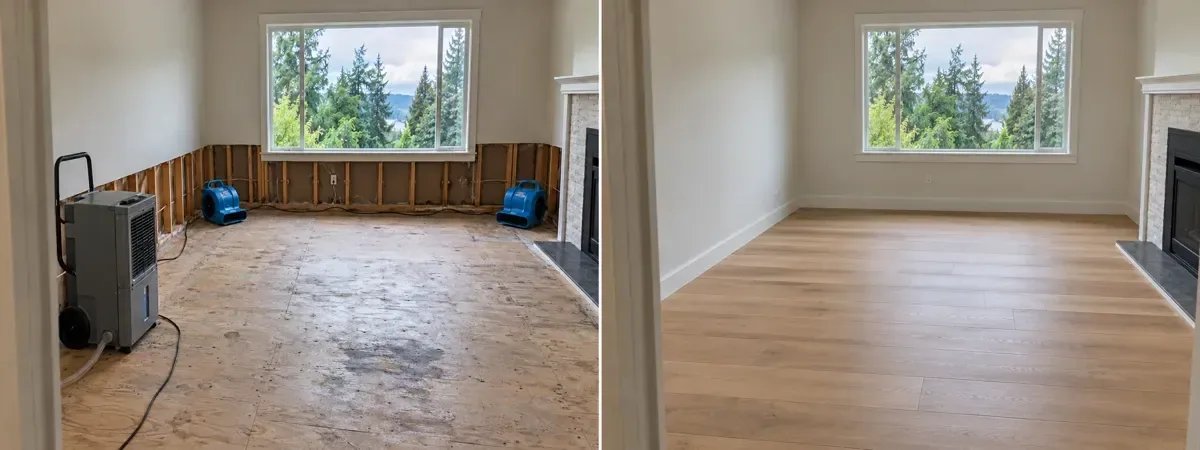
After a burst pipe, an overflowing appliance, or another water loss, homeowners often see drying equipment arrive before any repairs begin. Damaged flooring may be removed, walls may be opened, and the room can look unfinished even after the water is gone. That work is part of a process with two distinct stages. Water mitigation addresses the immediate damage and drying. Reconstruction repairs and rebuilds the affected spaces. Depending on the loss, your home may need one stage or both. At Pacific Northwest Restoration, our mitigation and reconstruction departments help homeowners move from emergency cleanup through finished repairs.
| What to expect | Water mitigation | Reconstruction |
|---|---|---|
| Main purpose | Limit further damage, remove water, and dry affected materials | Repair damage and restore the finished space |
| Typical work | Assessment, extraction, cleaning, selective removal, and drying | Drywall, insulation, flooring, cabinetry, trim, and painting |
| Equipment and materials | Extraction equipment, air movers, dehumidifiers, and moisture meters | Building materials, fixtures, finishes, and construction tools |
| What you may see | Exposed surfaces, drying equipment, and removed materials | Installation, finishing work, and the room coming together |
| Completion | The affected area meets the project’s mitigation requirements | The agreed repairs and finishing work are completed |
What water mitigation includes
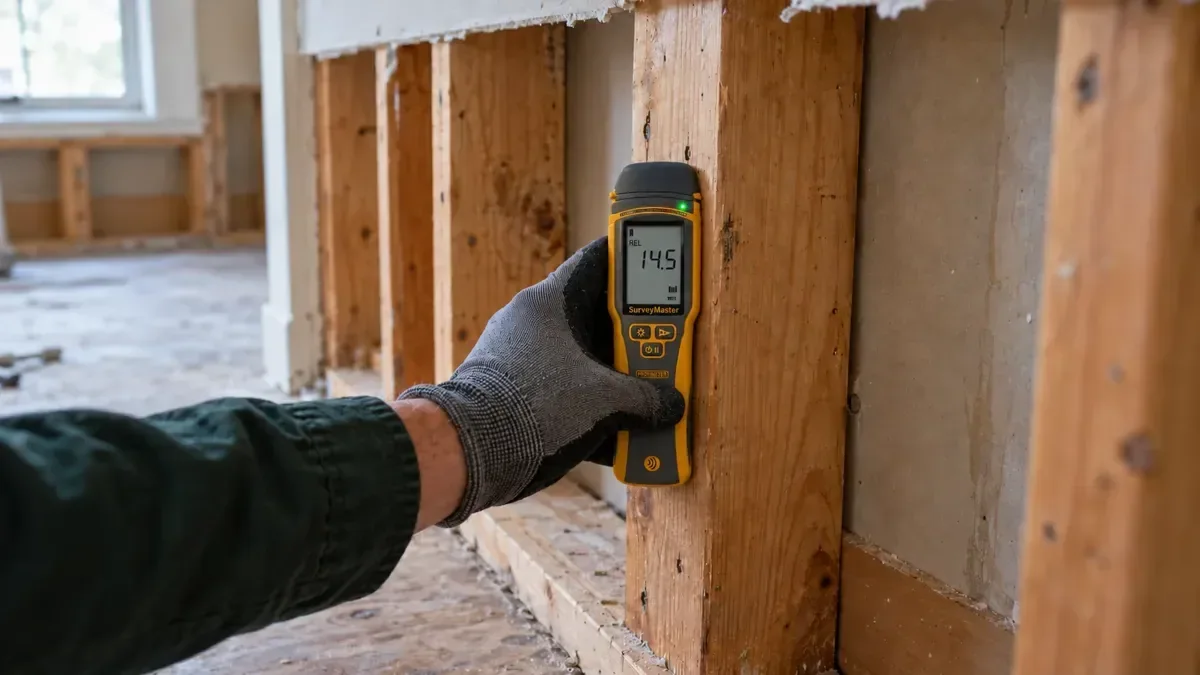
Mitigation begins with understanding where the water went. Visible water is only part of the assessment. Our team examines the affected rooms and uses moisture detection tools to investigate materials that may be wet beneath or behind the surface. The water source, materials involved, duration of exposure, and potential contamination help determine the approach. Depending on the findings, mitigation may include:
- Extracting standing water.
- Protecting or moving belongings to provide access.
- Removing materials that cannot be appropriately restored.
- Opening affected assemblies where necessary for access and drying.
- Cleaning affected surfaces according to the loss conditions.
- Installing appropriate drying equipment.
- Taking moisture readings and documenting progress.
Removal decisions should follow the assessment. Different materials and water conditions require different approaches; every wet wall or floor does not automatically require the same demolition. The leak or other source also needs attention. A qualified plumber or another appropriate professional may be needed to complete the source repair.
How drying is measured
A surface can look dry while moisture remains within the assembly. Moisture readings help the team evaluate progress and determine when affected materials are ready for the next stage. EPA-hosted guidance advises checking moisture in building materials before refinishing or covering them, so excessive moisture is not trapped inside.
What reconstruction includes
Reconstruction restores the parts of the home that need repair. Once the relevant mitigation requirements are met, the reconstruction team carries out the agreed repair scope. That may involve replacing insulation, repairing drywall, matching texture, installing flooring, replacing damaged cabinetry, reinstalling fixtures, and completing paint and trim work. Larger projects may also require architectural planning, permits, inspections, and coordination between trades. Reconstruction is also where homeowners make selections. Flooring, paint colors, cabinets, and other finishes need to work together and fit the project budget. Our project team helps explain what is included, what decisions are needed, and how those choices affect ordering and installation.
When the two stages connect
Planning can begin before installation is ready to start. While mitigation is underway, the reconstruction team may begin reviewing measurements, preparing estimates, and discussing selections. This allows useful planning to happen while drying progresses. Installation still needs to follow the site conditions, required approvals, and construction sequence. When drying equipment leaves, the mitigation stage may be complete while the repair stage remains ahead. Your project team should explain that transition and identify the next steps.
An upstairs bathroom leak
Consider an upstairs bathroom pipe leak. Water affects the bathroom floor and the ceiling in the room below. During mitigation, the team assesses both spaces, extracts water where needed, determines which materials can remain, and removes affected materials where necessary. Drying equipment and moisture monitoring address the remaining wet assemblies. During reconstruction, the team repairs the ceiling, replaces insulation where included, completes drywall and texture work, and paints the affected areas. Bathroom flooring, baseboards, or cabinetry are replaced where required by the agreed scope. These are different tasks within the same recovery process. The mitigation work establishes conditions for repairs; reconstruction brings the rooms back together.
How PNWR helps with both stages
PNWR connects the two stages through coordinated project information. Photos, measurements, moisture records, and documentation of removed materials help the reconstruction team understand what happened and what remains to be repaired. Our departments work together so the repair planning can build on the mitigation assessment. Homeowners also receive guidance about the current stage, outstanding decisions, and upcoming work. For projects involving more extensive selections or layout considerations, our architect and in-house interior designer can help guide the design within the agreed scope and budget. We review finishes, installation requirements, and pricing together. Optional upgrades are discussed and priced before approval, helping homeowners make informed choices.
Common homeowner questions
Does every water loss need reconstruction?
No. Some materials can be dried and retained without significant repair work. Reconstruction is needed when damage or necessary removal leaves areas requiring rebuilding or refinishing.
How long does the process take?
Timing depends on the affected materials, extent of damage, drying progress, repair scope, approvals, and material availability. Your team should provide an estimate based on the actual project and explain changes as they arise.
Are mitigation and reconstruction the same estimate?
They cover different work and may be documented separately. Ask for a clear explanation of each scope, its cost, and the authorization needed to proceed.
Can PNWR help if another company already completed mitigation?
Yes. Contact our team about a reconstruction assessment. We can review the available documentation and site conditions to determine the next steps.
Pacific Northwest Restoration helps homeowners throughout the Puget Sound area understand and manage both stages of water-loss recovery.
Need emergency cleanup or repairs after drying?
Contact Pacific Northwest Restoration to discuss your property and the next steps toward getting your home back together.
Source for moisture guidance: EPA-hosted FEMA flood recovery guidance.