24/7 Storm Response
Storm damage response that secures the property and carries into repair.
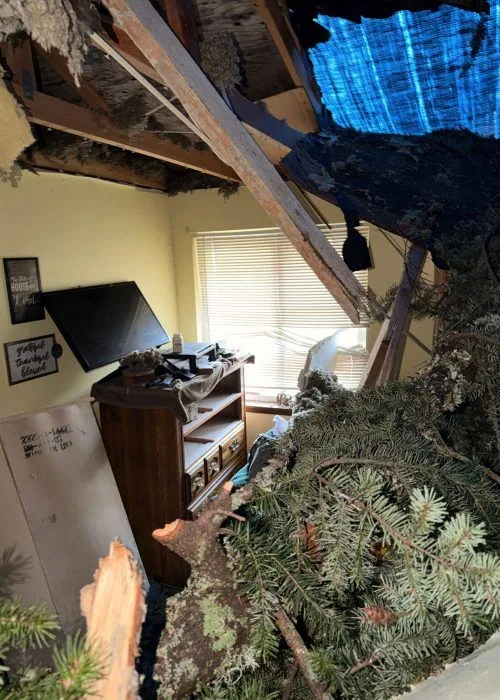
Wind, falling trees, and roof openings can expose a property to continuing damage. PNWR coordinates emergency tree and debris removal, tarping, stabilization, water mitigation, documentation, and reconstruction.
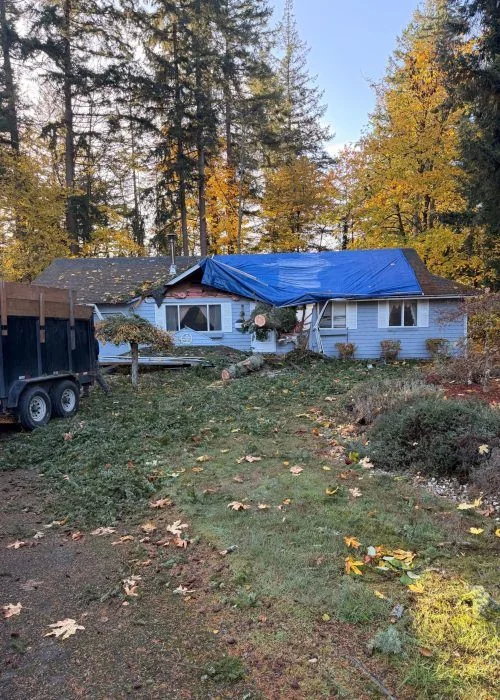
Conditions this service addresses
If there is an active hazard, keep people away and call emergency services or the appropriate utility first. When the site is safe to approach, PNWR can help define the restoration path.
- Trees or limbs on a structure
- Roof openings and active water entry
- Unsafe debris and damaged access
- Interior water or structural damage
A clear path from storm damage to repair
Evaluating Trees Damaged by Storms
The first step in our tree removal process is a thorough evaluation of the trees affected by the storm. Not all damaged trees are equal in terms of risk; some may pose immediate threats to structures or power lines, while others might be at risk of falling later. Our experts assess factors such as the degree of structural damage, the health of the tree, its angle of lean, and its proximity to buildings.
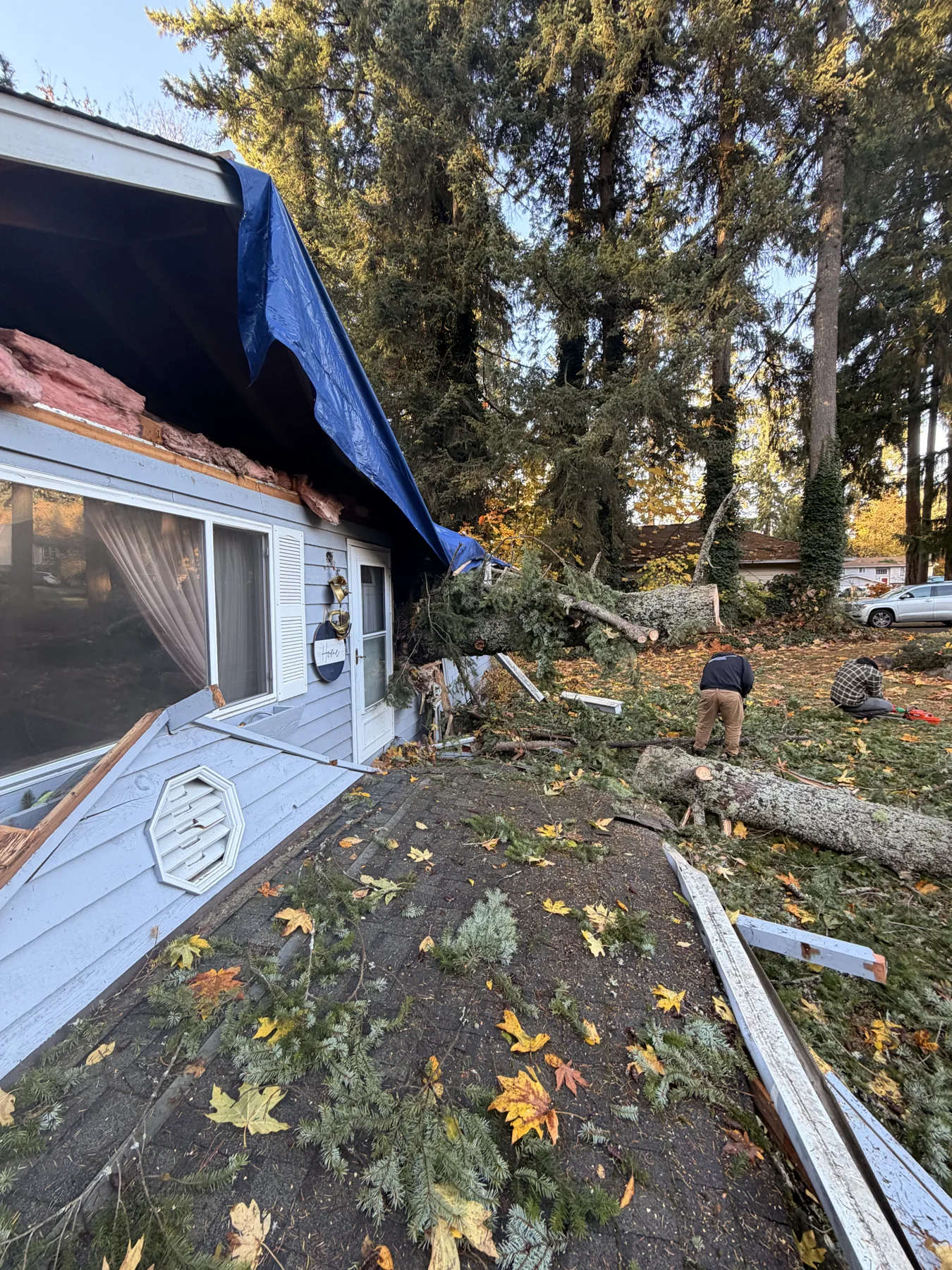
Planning for Safe and Effective Tree Removal
After evaluating the situation, we proceed to formulate a strategic plan tailored to each tree’s specific conditions. The planning phase is critical, as it allows us to minimize risks and ensure an efficient removal process. Our team considers several key factors, such as the stability of the tree, its size, and its potential fall path.
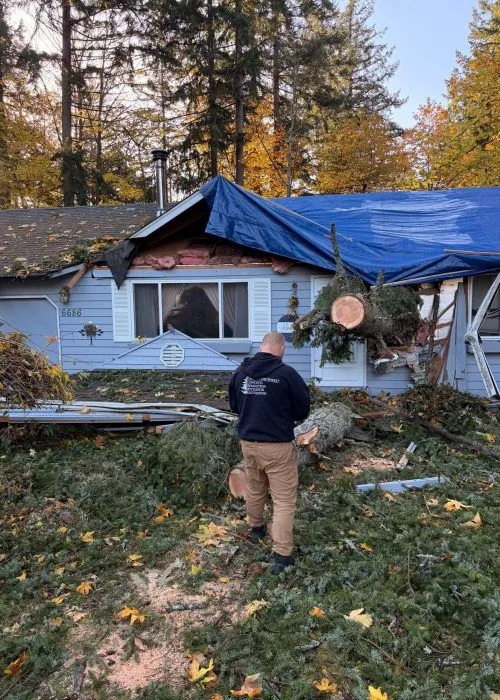
Planning Equipment and Access
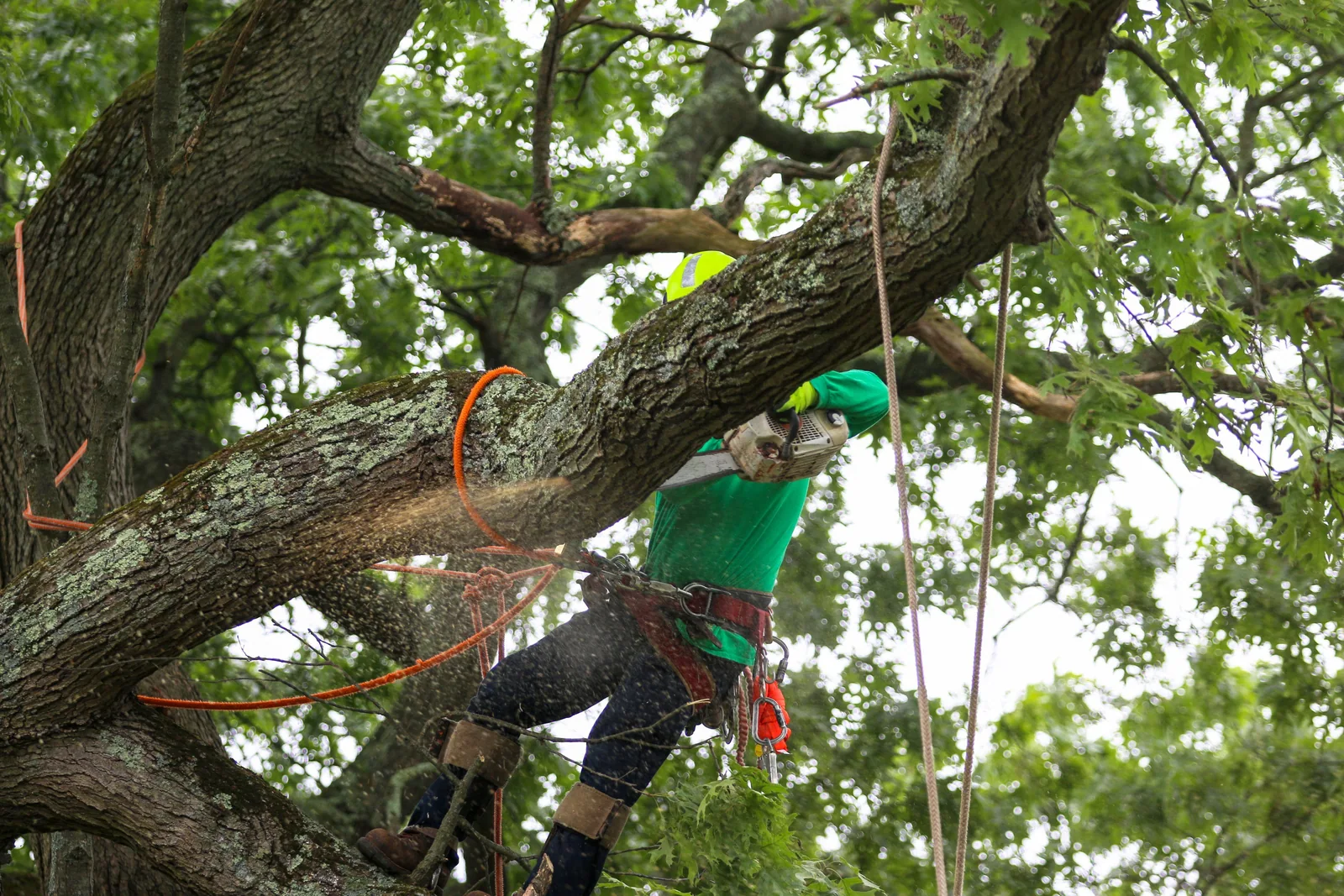
Additionally, we plan for the necessary equipment and personnel required for the job. Depending on the complexity of the removal, we might utilize cranes to lift heavy branches, specialized rigging systems to control the descent of tree sections, and various types of chainsaws for precise cutting.
Cleanup and Debris Handling
Once the hazardous trees have been removed, our focus shifts to cleaning up and disposing of the resulting debris. This involves chipping branches and cutting logs into manageable sizes, which allows for easy transportation and disposal. We utilize woodchippers to process smaller branches into mulch or chips, which can be recycled for landscaping purposes or properly disposed of according to local environmental guidelines.
More from this collection
Explore the details. Select a photo to see the full image.
Read the full guide
After a Storm: Tree Removal and Property Recovery
Assessment, removal planning, debris cleanup and the transition to property repairs after a storm.
One recovery team
Emergency calls answered day and night
We're there in 90 minutes
Mitigation, contents, demolition, and rebuild coordinated together
Storm Tree Removal FAQs
What should I do if a tree falls on my home?+
Keep people away from the affected area, watch for downed power lines, and call emergency services or the utility when appropriate. Do not enter an unstable structure. Contact your insurer and a qualified restoration team.
Can PNWR tarp the roof after removing a tree?+
Yes, when site conditions allow. Temporary roof protection and stabilization can help limit additional weather damage until permanent repairs are planned.
Is storm damage usually covered by insurance?+
Coverage depends on the policy, cause, and circumstances. PNWR documents the damage and completed work, but the insurance carrier decides coverage and payment.
Every property, policy, and loss is different. PNWR documents the restoration work; the applicable insurer determines coverage and payment.
24/7 Emergency Response
Damage is active? Call the 24/7 emergency team now.
We're there in 90 minutes. Call our 24/7 emergency team.